
More workers are remote today, with the work-from-home workforce increasing by 1 to 3% every year. Employers worldwide are taking advantage of this trend. Companies are looking beyond their borders to source the best talent and build dream teams.
But hiring internationally comes with its challenges . Effective onboarding, compliance risks, international payroll, and overseas taxes are all obstacles to be overcome.
So, what’s a hiring manager to do? In many hiring scenarios, working with an employer of record (or EOR) is the most straightforward approach. An EOR takes care of the biggest challenges for you.
In this article, we explain what an employer of record is, the benefits of using one, and how to choose the right EOR for your business.
What is an employer of record?
An employer of record (EOR) is an entity through which you can legally and efficiently employ your dream hires, regardless of where they live.

The EOR acts as an employer on your behalf. They typically manage hiring, compliance requirements, payroll, benefits, and more for your foreign employees. As a result, you minimize the cost and complications when hiring international talent.
Why businesses need employers of record
Most companies don’t have the resources or expertise needed to make global hiring work, and mistakes come with considerable risks.
Sean Page, a talent branding and hiring expert who has worked for some of the world’s top startups, agrees. He says:
“[Global hiring] is a resource-intensive process…It can take a minimum of six months to plan thoughtfully, get a vendor who has the knowledge to set up an entity in that particular country, and then get the IT, finance, people, talent, and legal teams all in alignment…In my previous roles, we normally wouldn’t even set up an entity until we knew that there were going to be multiple role openings in that particular country or region.”
For companies with the resources, opening an entity may not be the best use of their time or money. Partnering with an EOR — that already has established entities in the countries where they want to hire — is often faster and more cost-effective.
For example, Remote is an employer of record with business entities in dozens of countries, with all services set at a low flat rate with no hidden fees and no deposits. Remote's approach to transparent pricing is outlined in more detail in our Fair Price Guarantee .
Reducing costs and complications of global hiring are advantages of EORs, but far from the only ones. Hiring managers also need to be mindful of misclassifying workers in foreign countries (more on this later).
See also: The consequences of misclassifying employees as contractors
Christy Zajack, a talent acquisition expert who has hired for companies like American Airlines, Hilton, and Pfizer, explains that:
“Labor laws are often very confusing, different in actual practice [than in writing], or ill-defined until there are court decisions.”
Laws around work hours, overtime, terminations, domicile, workplace, payroll, and taxes are just a few of the things Christy says employers must consider before hiring in another country.
By working with an EOR, businesses can tap into the expertise of employment lawyers and business experts whose entire focus is getting global hiring right.
This means that internal talent specialists don’t have to worry about keeping up with changing laws in multiple countries. Instead, they can focus on doing what they do best — like attracting and retaining the right talent.
3 employer of record benefits: Why use an employer of record?
Let’s take a look at how hiring managers can benefit from partnering with an EOR.
1. Simplify regulatory compliance
EORs ensure that you adhere to local laws, tax regulations, and employment standards. Local specialists take care of these compliance standards on your behalf, reducing the risk of penalties and fines and allowing you to run a smooth and compliant global operation .
Take a look at Remote as an example. Our global HR experts ensure you’re compliant in all employee countries.
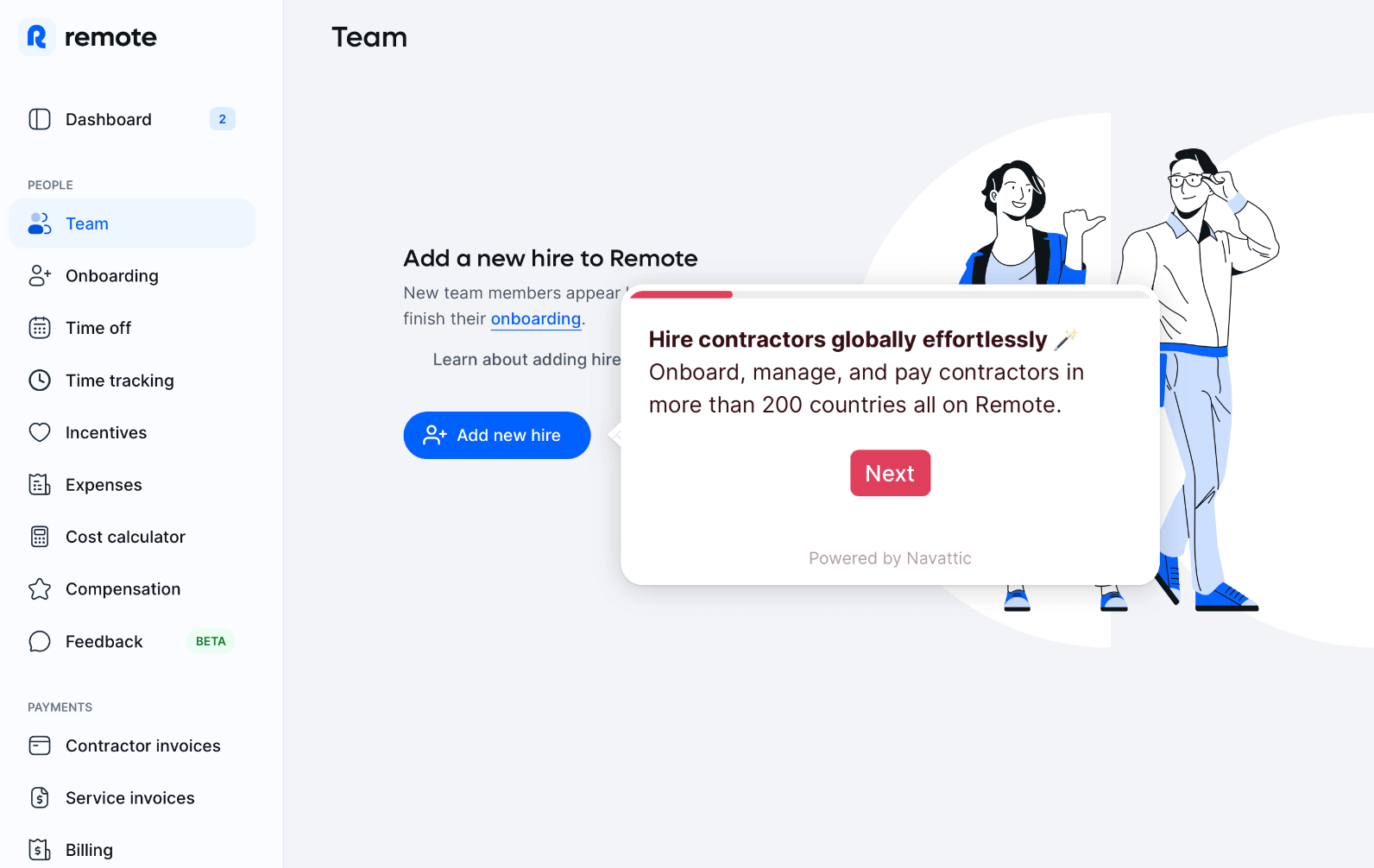
From local employment laws to payroll rules — Remote helps you navigate global hiring like a pro.
2. Reduce costs
Think about the time, cost, and effort of setting up and maintaining a legal entity in a new country — it’s a lot. Outsourcing HR functions to an EOR can provide cost savings, allowing you to invest your money in other areas of your business.
Using an EOR is also less time-intensive, requiring no ongoing maintenance from you. You hand over the operation to them and they handle the heavy lifting. It frees you up to focus on other areas of the business, like successfully managing a global team .
3. Improve the employee experience
To boost retention rates and keep new hires happy, you need to create an effective onboarding process for international hires.
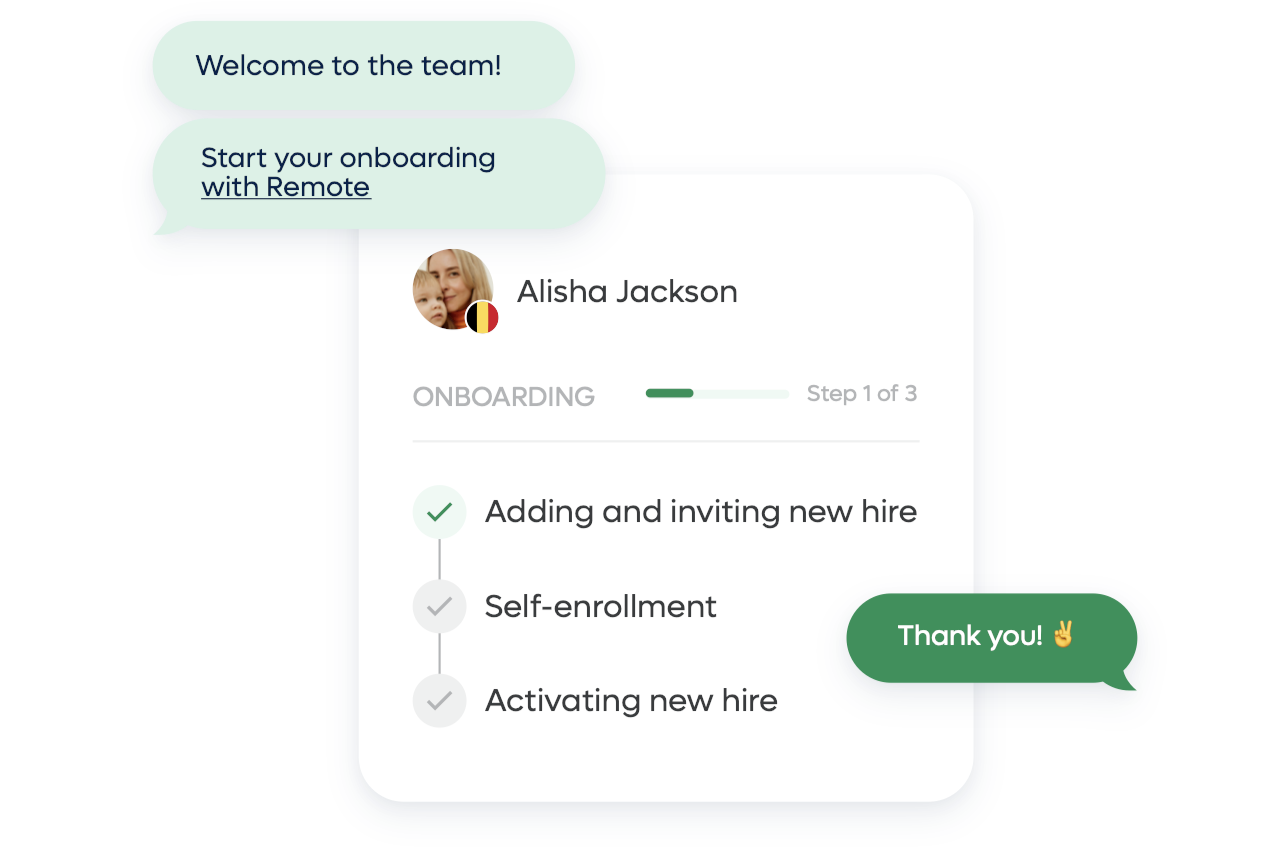
This is where EORs can help. They can quickly and efficiently onboard new employees from wherever they’re working. Plus, an EOR can handle payroll, ensuring timely payment in local currencies.
What makes an employer of record different?
Many recruitment teams have experience working with staffing agencies, payroll companies, and professional employer organizations (PEOs) — but these providers aren’t the same as employers of record.
It’s vital to understand the differences when deciding on the best solution for your business. So, let’s take a look at how an EOR is different from other solutions.
Employer of record vs a payroll company: What’s the difference?
Payroll companies offer software services to automate payroll obligations and accounting for year-end taxes. Some also provide limited HR services but aren’t equipped to hire employees on behalf of their clients in countries worldwide.
Employer of record services goes far beyond what a payroll company can offer for businesses that want to hire internationally. While a payroll company provides mostly financial services, an employer of record handles everything related to compliance, payroll, and benefits management in the countries where your employees work.
Employer of record vs PEO: What’s the difference?
A PEO, or professional employer organization, is an outsourced HR department that handles things like payroll and benefits on behalf of your business. On the surface, this might seem quite similar to the services provided by an EOR, but there are significant differences.
A PEO requires your company to own a local legal entity in the country where you want to hire. In addition, a PEO requires your business to enter into a co-employment arrangement, in which both you and your PEO employ the worker at the same time.
You can read more about the differences between a PEO and an EOR in our previous article !
Employer of record vs contractor: What’s the difference?
A contractor is a skilled individual who you enter into a contract with to complete specific tasks. If you only plan on hiring independent contractors, you might not need an employer of record because you don’t need to set up an independent entity to hire contractors abroad.
However, if you plan on hiring employees in different countries, you’ll need an EOR. Also, if you plan on bringing on a mix of employees and freelancers, an EOR can help you manage both, taking the headache out of managing a complex team.

Employer of record vs staffing agency: What’s the difference?
Staffing agencies focus on matching businesses with talent, usually to help with temporary or medium-term hiring needs. They offer up their talent network, review resumes, initiate contact between candidates and hiring managers, and collect feedback from both sides.
Unlike an EOR, they can’t actually hire an employee on behalf of a client’s business.
An employer of record manages the entire hiring process for their client company, up to and including managing the employment contract. They handle payroll, taxes, benefits, and compliance. In other words, EORs offer a much broader scope of services than a traditional staffing agency.
Use an EOR to stay safe when hiring internationally
If you’re interested in making your first global hires, an EOR is the safest and easiest solution. Whether you want to hire for fully remote roles , hybrid teams, or globally distributed offices, EORs act as your partner to protect your business throughout the hiring process.
Let’s look at how an EOR can protect your business in more detail.
Avoid misclassification and other mistakes with local labor laws
Understanding local labor laws is perhaps the most daunting aspect for any HR or hiring manager considering their first international hire.
This is why some companies go the route of hiring their workers as independent contractors instead of employees — a mistake that, unfortunately, can be costly. Let’s use an example to demonstrate.
Suppose benefits-eligible employees are misclassified as independent contractors. It can cost your business thousands in back payments on employee taxes and social security benefits, in addition to the gross amount already paid to their workers.
There may also be fines, interest, or other penalties depending on the specific situation and the misclassified worker’s country of residence.
Working through an EOR is an easy and cost-effective way for businesses to switch misclassified workers to employees and avoid these penalties.
See also: Correctly classify employees and contractors with Remote’s misclassification tool .
In addition to the risk of misclassification, staying abreast of changes in local labor laws in foreign countries falls well outside the scope of most talent and HR roles. Instead, when laws change in the countries where you have employees, your EOR notifies you swiftly and makes changes on your behalf.
Create locally compliant benefits packages
To secure the best talent, you need to be competitive with the packages you offer. This requires you to understand the expectations of workers in those regions, which may include supplementary employee benefits.
This is where an employer of record can help, tailoring benefits packages to match what is customary in the country where you wish to hire. But it also considers statutory and supplementary benefit packages, ensuring that your benefits that comply with local laws.
Manage terminations effectively
Every country has its own laws around termination. For example, hiring in the United States is based on “at-will employment,” meaning an employee can be terminated at any time. But terminating employees in countries like the Czech Republic requires a two-month notice period.
Failure to comply with these requirements can result in expensive international legal disputes.
An employer of record knows the protocols for termination in each country, which is essential when drafting employment agreements with clauses for notice periods and severance. Your EOR can also help manage issues — like safeguarding sensitive client company data and intellectual property — after termination.
Protect your intellectual property
Risks around intellectual property ownership are crucial for companies to consider when hiring an employee in another country. Laws regarding intellectual property rights are complicated enough in one country. Add multiple to the mix? Questions of ownership quickly arise.
See also: Intellectual property and invention rights for remote teams
Employers of record either work with local legal experts or hire their own to handle IP transfers.
At Remote, for example, every client company is protected by Remote IP Guard . This ironclad IP protection service guarantees the maximum retention of your intellectual property rights when you hire internationally. Companies approaching major financial events, such as IPOs or acquisitions, must be especially vigilant about their IP.
Centralize management of international hires
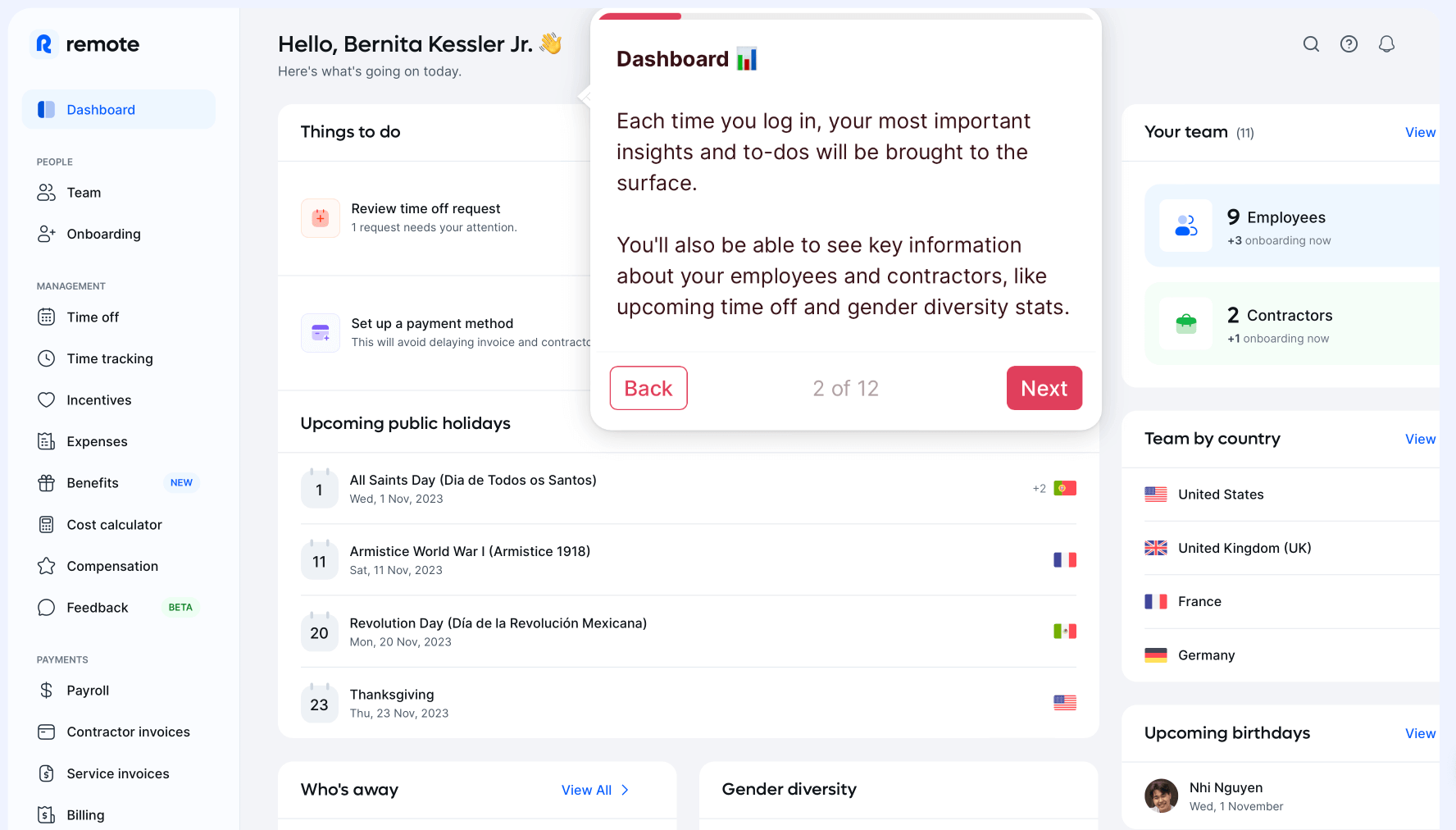
When working with an employer of record like Remote, all necessary documentation for your hires is centralized in one place. This makes it easy to manage and review employee information at a glance.
Your EOR will also ensure your recordkeeping aligns with local requirements, including maintaining documentation for terminated employees. The ease of managing and keeping records is just one additional benefit to consider when considering the value of an EOR.
How to select the right employer of record for you
If you decide that an employer of record is the best approach for your international hiring needs, the next step is choosing the right EOR partner.
What to look for in a good EOR
The right employer of record will offer global HR solutions , salary simulations, onboarding, payroll approvals, benefits, local taxes, and more — all managed in one place.
But this is just the beginning of what a good EOR can provide to their clients. Security , which encompasses data protection and compliance, is also essential, as is IP protection .
You should also understand the way your EOR handles your business behind the scenes. Your employees deserve a great experience with your company, no matter where they live and work. A good EOR will prioritize the experience of your employees to ensure they feel like full, valued members of your team.
Why working with an EOR with owned entities is crucial
One of the most crucial things to understand when evaluating different employers of record is whether they own legal entities in the countries where they operate, or whether they rely on a network of third-party organizations.
Let’s say that you’re hiring a new employee in a different country:
A partner-dependent EOR will go down a chain of vendors to get the correct information. This could take days to complete, and any miscommunications between the various parties will create complications. This also makes EOR services more expensive: since there are so many intermediaries involved, everyone wants a cut of the money.
An owned-entity EOR has established legal business entities in the countries where you want to hire. They can control the entire hiring process and manage your global employees, which means less friction, lower cost, and a superior experience for you and your team.
Learn more about owned-entity versus partner-dependent employers of record in our helpful on-page guide .
Questions to ask an EOR before signing the contract
Before working with an employer of record, there are a few questions to ask:
Do you own an entity in this country, or are you dependent on third parties? Be cautious: some EORs own entities in some places and not in others, creating a chaotic experience for your employees (and unreliable pricing for you).
Do you handle IP transfers and protection? Ask hard questions about how the EOR handles IP transfers. The best ones know exactly how the laws of the country will affect your IP and what you need to do to retain your rights.
Are you sharing our data with any third parties? Again, EORs dependent on third parties have long lists of partners. Many of those partners have partners of their own, creating a web of companies with access to your sensitive data.
Is all documentation and information centralized in one software hub? Your EOR handles the hard legal work on the back end, but your user experience is also critical. Try out the software to see whether you can manage everything you need in one place.
Getting answers to these questions will help you make the right decision on which partner to trust for your international hiring needs.
The best employer of record for your global team
Using an EOR can streamline your entire international hiring process. It ensures you comply with local regulations, and provides global employees with a seamless and efficient onboarding experience.
By now, know when to use an employer of record and how to find the best EOR for your business needs. So what comes next?
Working with an EOR, like Remote.
Remote helps international teams hire, pay, and onboard global hires in just a few clicks while keeping your company compliant every step of the way. We fully own legal entities in every country where we operate, so you know you and your team will always receive the best experience.
Get started today and begin onboarding your first employee in minutes!