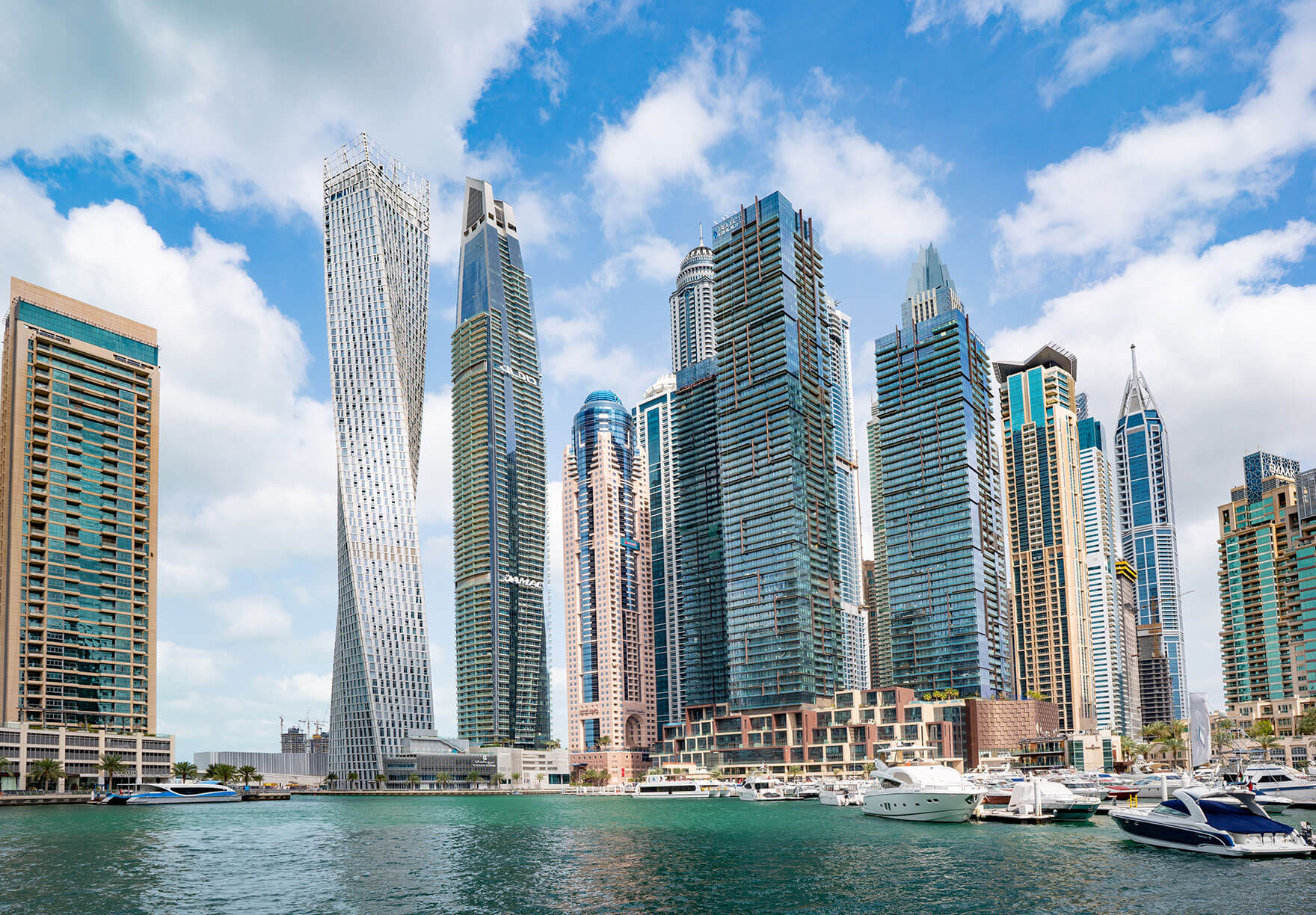
The city of Dubai in the United Arab Emirates (UAE) is one of the fastest-growing hubs for global teams. If you plan tohire or relocate a foreign national to Dubai, you’ll need to secure the right work permit and residence visa, and follow Dubai’s immigration and labor rules end-to-end.
In this article, Remote gives you an overview of work visa requirements and work permits in Dubai, including work visa categories, requirements, and the application process.
Do non-citizens need a work visa or work permit in Dubai?
Any foreign national working in Dubai must have a work permit from the Ministry of Human Resources and Emiratisation (MoHRE) or the relevant free zone authority, plus a residence visa issued through Dubai’s
General Directorate of Residency and Foreigners Affairs
(GDRFA-Dubai).
Work authorization checks in in Dubai
Working on a tourist or visiting visa is unlawful under UAE Labour Law. The employer (sponsor) must obtain a work permit from the Ministry of Human Resources and Emiratisation before a foreign national begins any work.
After the employment entry permit is approved and the employee enters (or changes status in-country), the employer submits the residency issuance application to GDRFA-Dubai and opens the linked Emirates ID application.
The employee then completes the medical exam and Emirates ID biometrics. Once those are cleared, GDRFA approves and issues the residence permit electronically. The Emirates ID card is printed and delivered afterward, and serves as the primary proof of residency.
Types of work visas in Dubai
Dubai offers many types of visas and permits for those who want to stay more than a few months, which are called residence visas. Work visas in Dubai include:
Standard work visa (employer-sponsored residency)
A standard work visa is the default route for most corporate hires (mainland and free zone). After approval, residency is typically issued for one, two, or three years, depending on sponsor and category. For private sectors, residency is normally granted for two years.
Green Visa (self-sponsored, 5-year)
A Green visa is for qualified talent who meets set criteria:
Skilled employees: Valid employment contract in a skilled occupation (one of MoHRE’s occupational levels 1–3), bachelor's degree (or equivalent), and a minimum salary of AED 15,000 per month.
Freelancer/self-employed track: Self-employment permit from MoHRE, bachelor's degree or specialized diploma, and annual income of AED 360,000 over the last two years or proof of financial solvency.
Family sponsorship and longer grace periods are available for Green visa holders.
Golden Visa (self-sponsored, 5 or 10-years)
A Golden visa is for eligible investors, entrepreneurs, highly-skilled professionals, and outstanding students. Note that a Golden visa is still for residency, not work authorization; private-sector employment still requires a work permit and a standard labour contract. Golden Visa holders use Emirates ID as proof of residence and may stay outside the UAE for more than six months without losing residency.
How to get a work permit in Dubai
In Dubai, the employer (sponsor) applies for the employee’s work permit online. Here are the steps for mainland hires:
eIssue the offer/labor contract and make sure your company records are in order (trade/business license, establishment card, authorized signatory/e-signature card).
Apply via MoHRE eServices or in person at approved Tas’heel Customer Happiness Centers with the required documents.
Submit required documents: Employee passport copy and recent photo, signed employment contract/offer, your company license and establishment card. For skilled roles, add attested academic certificates matching the job title.
Pay the government fee, which varies by company classification and the role’s skill level.
Track the file: If MoHRE needs anything, respond to clarifications. When approved, you can move to the Employment Entry Permit step with GDRFA-Dubai.
How to get a work visa in Dubai
Once you have secured the MoHRE work permit, here's how to get a work visa for your employee:
Initial entry permit (employment entry visa)
Request the employment entry permit from GDRFA-Dubai so the employee can enter (or change status in-country) to finish residency. Entry permits typically give 60 days to complete formalities.
Medical examination and Emirates ID
Book the medical fitness test at an approved Dubai center and have the employee attend. At the same time, file the Emirates ID application and have the employee complete biometrics (fingerprints/photo).
Health insurance
Dubai ties residency issuance and renewals to valid health insurance. Start coverage in time for entry and medicals so nothing is delayed.
Residency issuance (no more passport sticker)
Once medicals and biometrics are clear, GDRFA-Dubai issues the residence permit electronically. Since April 2022, the Emirates ID is the primary proof of residency (the old visa “sticker” on passports was discontinued).
Validity and renewals
Employment residence visas are typically issued for one, two, or three years, with longer terms for self-sponsored routes. Renew before expiry, since residency remains valid only while the work permit and employment with the sponsor stay in force.
Digital nomad (virtual work) visa in Dubai
Dubai offers a virtual work residence permit: a one-year, renewable residence for people who work for an employer outside the UAE. It’s residency, not local work authorization, meaning your hire cannot take a UAE job on this visa. A work permit from MoHRE or free zones is still required for local employment.
Key requirements for a virtual work residence permit include:
A passport copy, UAE-valid health insurance, medical fitness result, proof of remote employment outside the UAE, and a salary certificate showing at least USD 3,500/month (or equivalent), and an Emirates ID application receipt after biometrics.
Select “issuance of the virtual work residence permit”, complete the form, upload documents, and pay fees.
Complete medical fitness and Emirates ID biometrics. When approved, the residence permit is issued electronically. Note that the Emirates ID is your day-to-day proof of residency.
Freelancing in Dubai (free zone freelance permit)
In Dubai, freelancers typically obtain a free zone freelance permit/license. After the permit is issued, the freelancer applies for their residence visa under the zone’s sponsorship through GDRFA-Dubai. Steps for getting a residence visa include: obtaining an entry permit, completing a medical fitness test, and an Emirates ID. Note that a free zone freelance permit is separate from the federal MoHRE freelance work permit; the latter authorizes freelance activity for UAE residents.
Here's how to apply for a freelance license in Dubai (varies by Free Zone):
Pick a free zone that licenses your activity (media/tech/design/education via GoFreelance; other sectors via zones like Dubai Multi Commodities Centre, Meydan Free Zone, etc.).
Apply for the freelance permit online and prepare passport, photo, CV, portfolio, and credentials. If the applicant is on an employer-sponsored visa, some Free Zones may also require a No Objection Certificate from the employer.
After approval, use the zone’s portal to obtain any required establishment card and request the entry permit for residency.
Complete medical fitness and Emirates ID biometrics. GDRFA-Dubai then issues a residence permit electronically. Emirates ID acts as proof of residency.
Note that if you plan to engage a freelancer as an employee in Dubai, you can’t use a freelance permit alone. Instead, sponsor them on a standard work visa, meaning a work permit from MoHRE or a free zone, with a Dubai residency visa. Use the freelance route only when the engagement is genuinely self-employed/contracted and compliant with UAE labor and immigration rules.
How Remote can help with work visas in Dubai
To hire or relocate employees to Dubai, you need to navigate immigration laws to avoid potential penalties, as well as handle payroll and benefits according to local tax laws.
That's why Remote’s Employer of Record service is invaluable. We act as the legal employer in Dubai on your company’s behalf. Remote helps you stay compliant with local labor and tax laws, so you can onboard your employees in a matter of days to save time and resources.
If you already have an entity in Dubai, Remote can help with international employee relocation with case-by-case immigration assessments, and guidance on Dubai work visa applications.