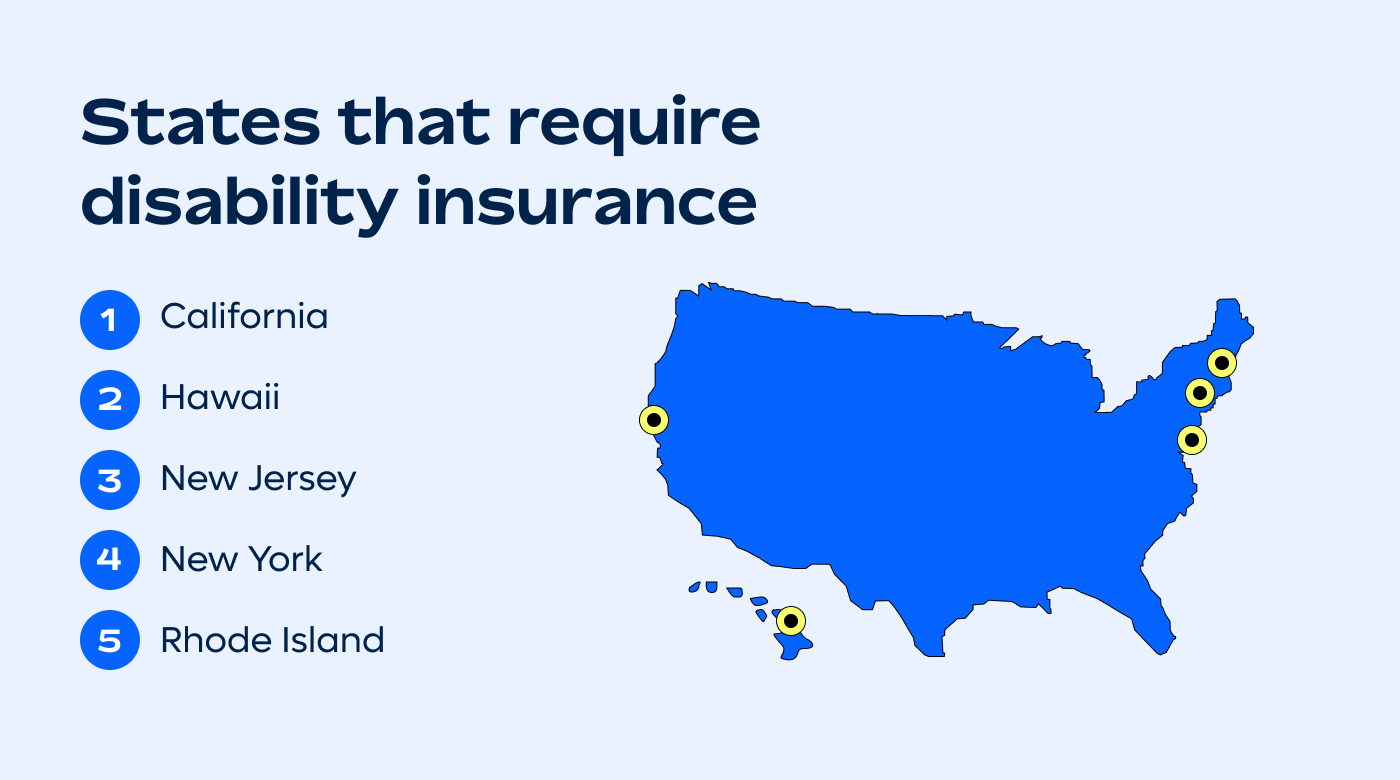
State disability insurance (SDI) ensures that your employees have backup income if injury or illness strikes, enabling them to recover fully. This type of insurance leads to happier, healthier, more productive staff, who feel supported through life's curveballs.
But not every state requires you to contribute to SDI. In this article, we’ll look at which US states do, and how you can compliantly offer your employees competitive benefits — wherever they’re based. We’ll also explain how to contribute to SDI, and the pros and cons of doing so.
So let’s jump straight in.
What is SDI?
SDI is a partial wage replacement insurance program, currently available in five US states. It is for people who need to take time off work due to a non-work-related illness or injury, as well as other specified health conditions.
SDI is funded through employee payroll deductions, known sometimes as the SDI tax.
What is SDI tax?
In states where SDI is applicable (see below), employers withhold a small percentage from their employees’ paychecks. In some states, this is denoted on the paycheck as temporary disability insurance (TDI) rather than SDI.
This deduction is typically based on an income cap, set annually by the state. For example, California currently sets the SDI rate at 1% of an employee’s gross wages.